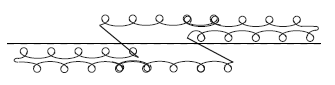
General information on Stoll knit and wear® technique
This knitting technique enables you to knit complete pullovers in a fully-fashioned shape.
The individual pieces body and sleeve are knit in a tubular way in the machine and connected by widening, narrowing and binding off in order to get a complete garment.
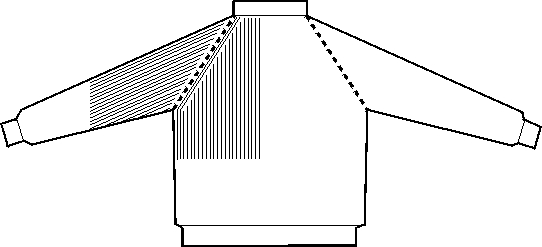
- The elements sleeve / body / sleeve are knit side by side with a separate yarn carrier at first.
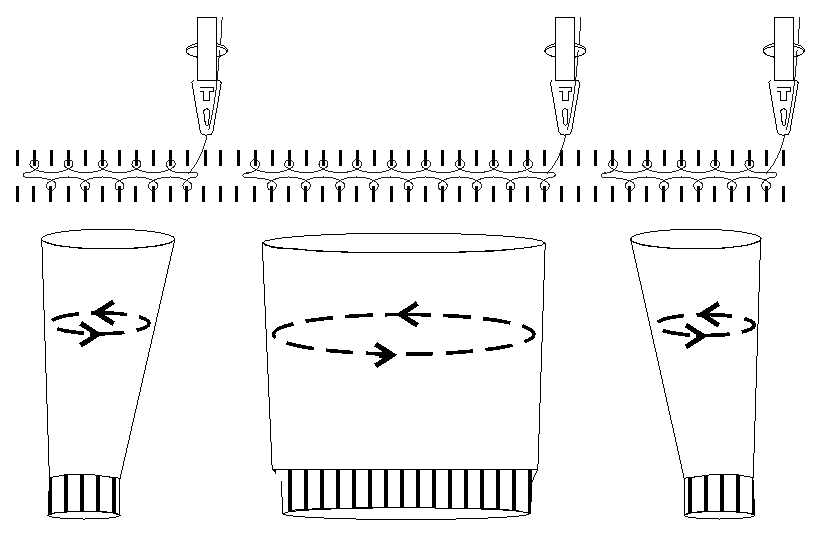
Yarn Carrier Specifications:
|
CMS - Type |
Yarn carrier specifications with knit and wear | ||
|---|---|---|---|
|
|
Left sleeve |
Body |
Right sleeve |
|
CMS xxx |
4 |
5 |
6 |
|
CMS 822 |
3 |
4 |
5 |
Shape part colors with knit and wear:
|
Left sleeve |
Body |
Right sleeve |
|---|---|---|
|
Shape part color #2 |
Shape part color #1 |
Shape part color #3 |
- After connecting the elements body and sleeve only one yarn carrier will be used until the end.
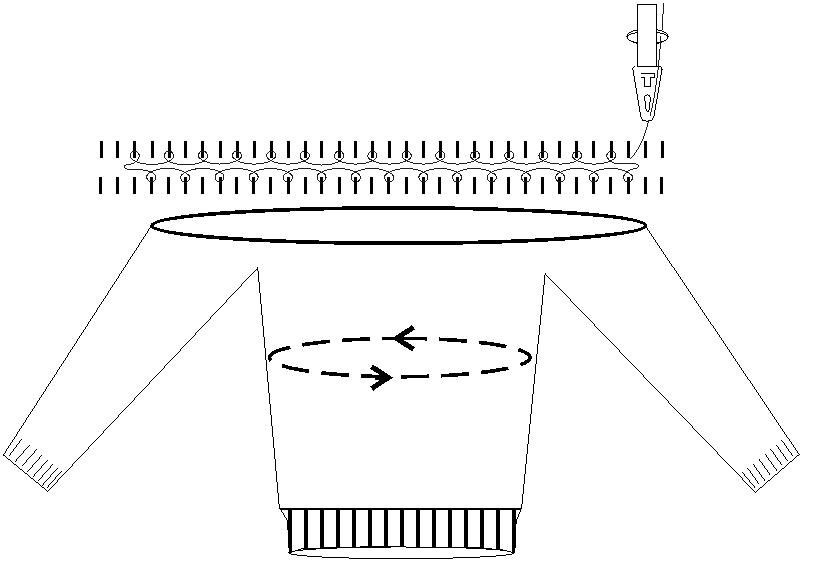
- The narrowings are performed in sleeve and body for shaping.
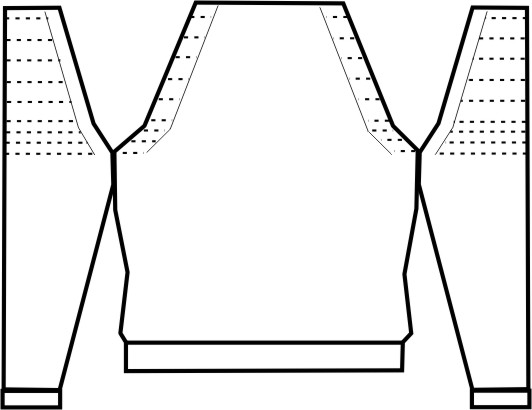
- Complete pullover with collar.
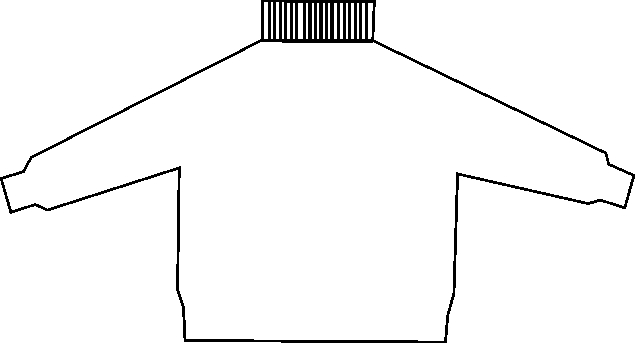
Pullover with V-neck:
If a V-neck is present in the fabric piece, a corresponding knitting sequence with a yarn carrier is used.
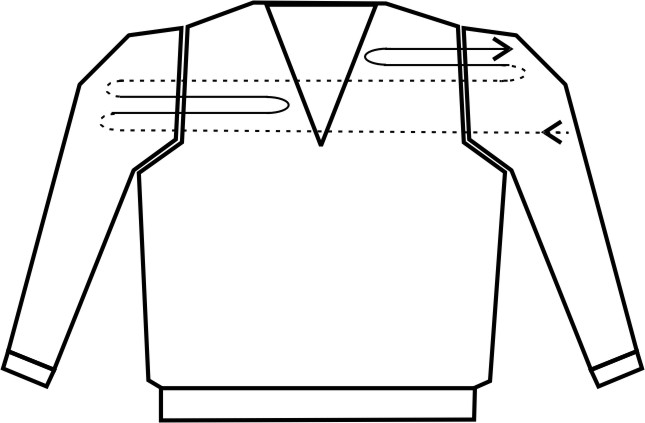
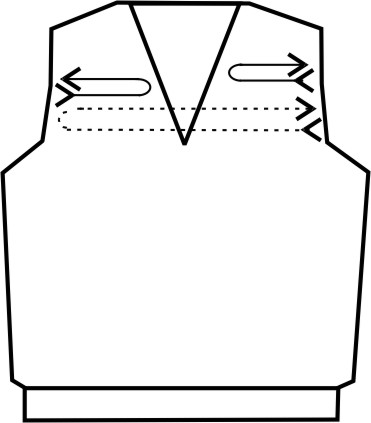
Tank top with V- neck:
With a tank top or waistcoat, the yarn carriers may not switch layers (front/back), so that no connection arises and the arm openings remain open. 3 yarn carriers are used in the corresponding knitting cycle.
The Stoll knit and wear® technique:
The Stoll-knit and wear® technology is based on the knitting in 1X1-technique.
Knitting of the fabric back (back layer L1):
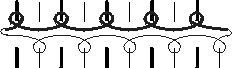
Knitting of the fabric front (Front layer L0):
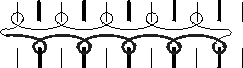
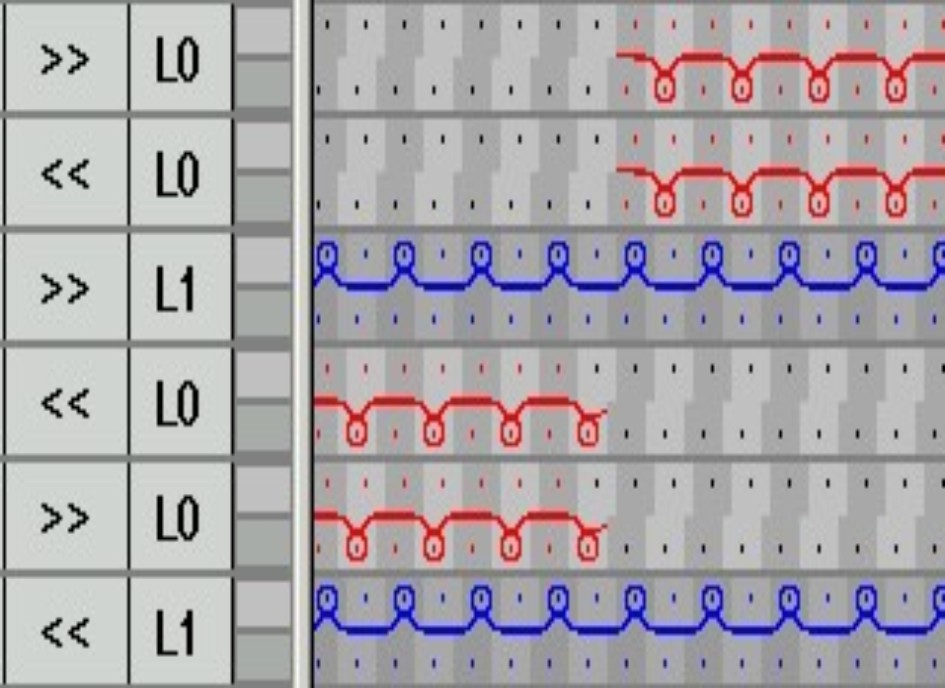
Stoll-knit and wear® knitting cycle:
Knitting of the fabric back (L1) in the carriage direction to the left

Knitting of the fabric front (L0) in the carriage direction to the right

When generating the pattern the transfer rows of both knitting layers (L0+L1) will be combined to one technical row.
Stoll-knit and wear® knitting cycle:
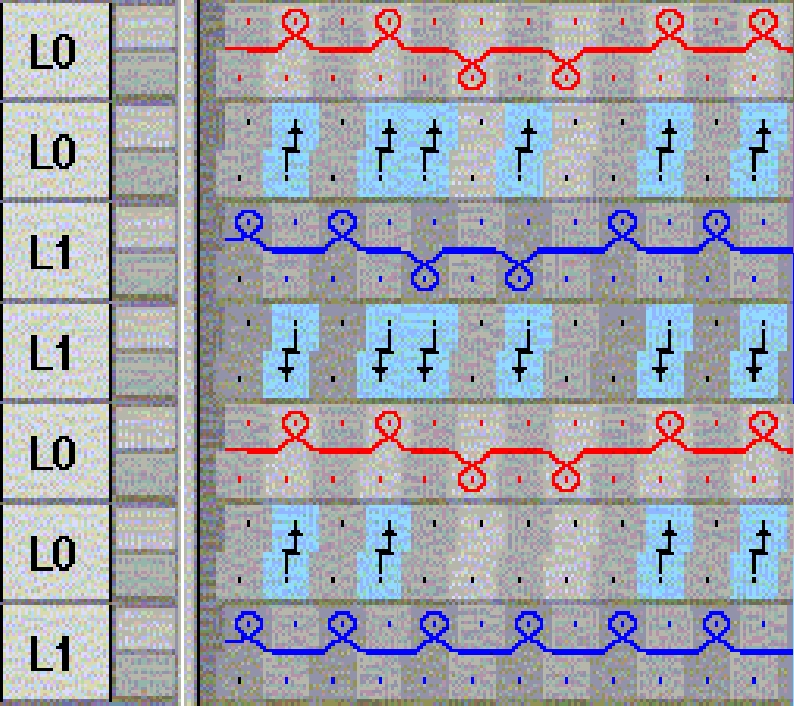
Stoll knit and wear® knitting cycle with V-neck:
|
Knitting of back (L1) and front (L0). |
Knitting cycle with V-neck |
|---|---|
|
|
|
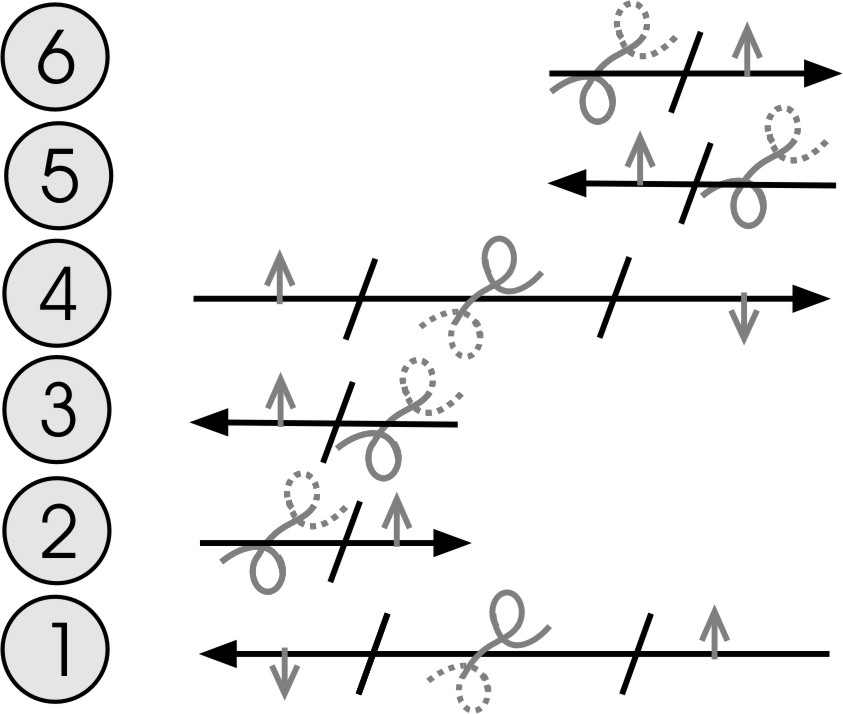
Stoll-knit and wear® knitting cycle when narrowing:
|
Knitting cycle when narrowing |
|
|---|---|
|
|
Back Needle Bed |
|
Front Needle Bed | |
|
|
|
|
|
Racking to the right |
|
|
|
|
|
Racking back into the home position V0 |
|
|
Spacing of the stitches on the layer L0 and the layer L1
|